Abstract Data Types
HashSets
In the last unit we looked at how a Hash Table is a nice alternative to other data structures that require fast access, especially when searching.
This is especially true when collisions can be avoided, which is almost impossible. However, a good hashing function can reduce the opportunity for collisions.
Collision resolution strategies such as Linear Polling and Separate Chaining can be used.
Also, when the Load Factor of a hash table passes a threshold, the table is resized with every item in the table being rehashed.
But which Abstract Data Types use Hash Tables in their implementation?
One ADT is the HashSet.
Union/Intersection/Difference
Now we know a little about subsets/supersets using the HashSet class's containsAll method.
We can also:
Union

Set
Set
set1.addAll(set2);
Will produce a HashSet containing {"Australia", "Canada", "USA", "UK", "France"}
Intersection

Set
Set
set1.retainAll(set2);
Will produce a HashSet containing {"Australia"}
Difference
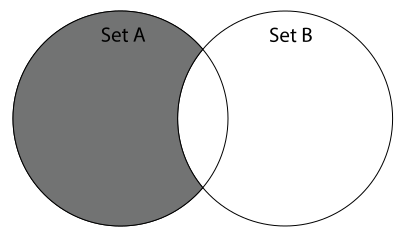
Set
Set
set1.removeAll(set2);
Will produce a HashSet containing {"Canada","USA"}
Glossary
object
property
method
create an object/instance of a class
instantiate an object
encapsulate
access
mutate
abstraction
Tags
idesyntax file class instantiate constructor type propertymethod