Intro to Encryption
creating a cipher
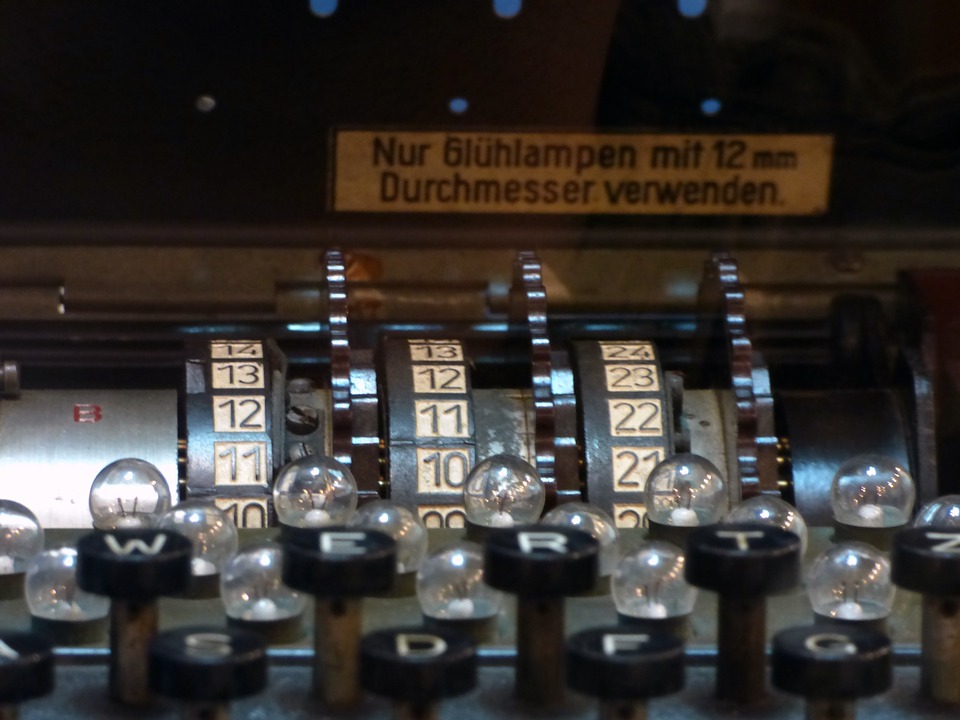
Tell me your secrets!
i'm just going to hack them anyway!
Think about your daily life. What information do you want to be kelp secret? Who do you want it to be kept secret from? How do you keep it secret?
More and more, our lives are taking place on the Internet. Unfortunately, the Internet is not a very secure place. Historically, hackers have had some big successes in stealing vast amounts of sensitive data transmitted through and stored on internet-connected devices.
Secrecy is a critical part of our lives, in ways big and small. As our lives increasingly are conducted on the Internet, we want to be sure we can maintain the privacy of our information and control who has access to privileged information.
Digital commerce, business, government operations, and even social networks all rely on our ability to keep information from falling into the wrong hands.
We need a way to send secret messages...
The Caeser Cipher
Many of the ideas we use to keep secrets in the digital age are far older than the Internet. The process of encoding a plain text message in some secret way is called Encryption
For example in Roman times Julius Caesar is reported to have encrypted messages to his soldiers and generals by using a simple alphabetic shift - every character was encrypted by substituting it with a character that was some fixed number of letters away in the alphabet.
As a result an alphabetic shift is often referred to as the Caesar Cipher.

Substitution Cipher
So, back in Julius Caeser's time, cryptography wasn't too sophisticated. Most people couldn't read, so it probably didn't need to be!
As the need to keep messages secret became more urgent, more sophisticated techniques were developed. One of them was the substitution cipher. How it works is actually quite simple, but breaking the code is really hard!
A substitution cipher maps every letter of the alphabet to a different letter and then a message is encoded using the mapped latters.

In the above example, each letter of the alphabet is mapped to a different letter. This new map is then used to encode a message. So, for example, plain text hello would result in this ciphertext: vzffq
A system receiving the encrypted data would be able to decode the message if it knew the mapping technique.
Can you see a problem with this encryption technique?
Crack the code!
You are going to mess around with a Caeser Cipher tool and a Random Substituation Cipher tool (with associated Frequency Analysis data). Play with the tool and let's have a go at cracking encryption!
Click to start!
Food For Thought
The examples of encryption techniques we look at today are pretty simple. A hacker could write a computer program and hack the encryption pretty easily.
Note the difference between decryption and cracking encryption. Decryption is when a human or a machine has the proper knowledge (key) to decrypt an encrypted message. Cracking encryption is when you do not know the key, you are just a hacker trying different techniques to reveal the original message.


Homework
Blown to Bits - Chapter 5 p165-169
Tags
encryption hack sophisticated decryption s#&^! frequency analysis Caeser cipher The Fuzz machine substitution cipher cipher map random cracking encryption
Tip
Do you know anything about 2-step Verification when you sign into an online account? Google offers this service. Check it out by clicking the image below:
