Source: CANEX Music
Source: CANEX Music
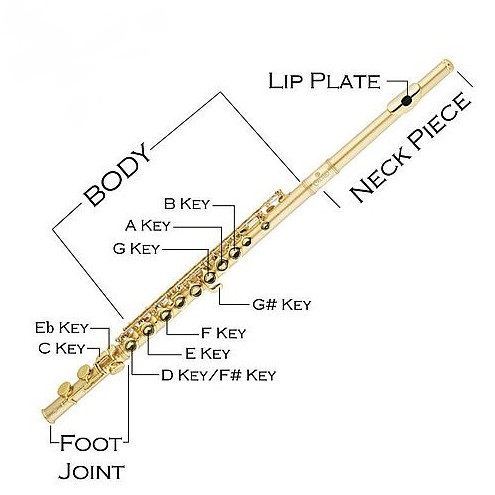
The flute is the oldest of all instruments that produce pitched sounds (not just rhythms), and was originally made from wood, stone, clay or hollow reeds like bamboo. Modern flutes are made of silver, gold or platinum; there are generally 2 to 4 flutes in an orchestra. A standard flute is a little over 24 inches long and is often featured playing the melody. You play the flute by holding it sideways with both hands and blowing across a hole in the mouthpiece, much like blowing across the top of a bottle. Your fingers open and close the keys, which changes the pitch.
The oboe is a 24 inches long black cylinder with metal keys covering its holes, and its mouthpiece uses a double reed, which vibrates when you blow through it. This vibration of the reed makes the air inside the oboe move, and thus creates sound. To play it, hold the oboe upright, blow through the double reed in your mouth, and use both hands to press down on the keys to open and close the holes and change the pitch.
Source: Wordpress.com
The oboe is a 24 inches long black cylinder with metal keys covering its holes, and its mouthpiece uses a double reed, which vibrates when you blow through it. This vibration of the reed makes the air inside the oboe move, and thus creates sound. To play it, hold the oboe upright, blow through the double reed in your mouth, and use both hands to press down on the keys to open and close the holes and change the pitch.
Source: ohmusic
Source: ohmusic
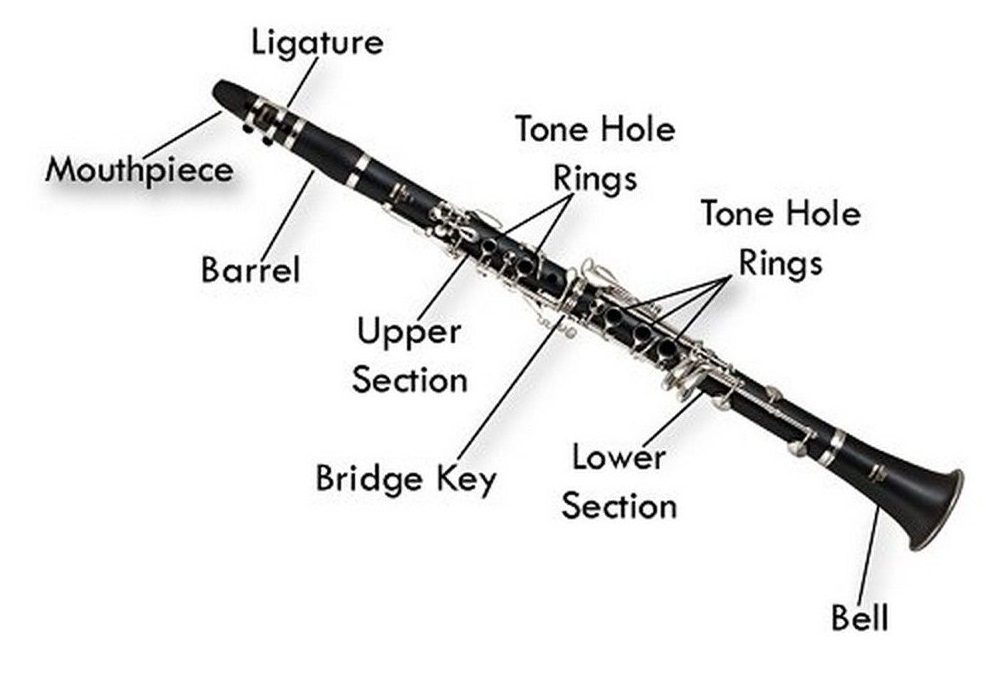
The clarinet could easily be mistaken for an oboe, except for the mouthpiece, which uses a single reed. Clarinets come in a number of different sizes, and the standard B-flat clarinet is just over 24 inches long. You play the clarinet as you do an oboe, by holding it upright, blowing through the reed, and using your hands to change the pitches by opening and closing the keys with your fingers.
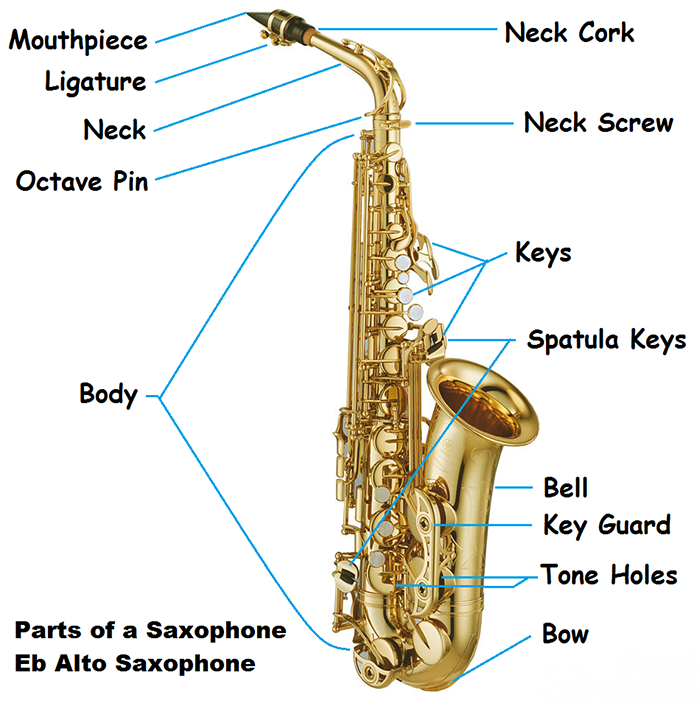
Saxophones are usually made of brass and played with a single-reed mouthpiece similar to that of the clarinet. Like the clarinet, saxophones have holes in the instrument which the player closes using a system of key mechanisms. When the player presses a key, a pad either covers a hole or lifts off a hole, lowering or raising the pitch, respectively.
Source: Wikipedia
Source: ultimatesongwriting.com by M. Cazaubon
Saxophones are usually made of brass and played with a single-reed mouthpiece similar to that of the clarinet. Like the clarinet, saxophones have holes in the instrument which the player closes using a system of key mechanisms. When the player presses a key, a pad either covers a hole or lifts off a hole, lowering or raising the pitch, respectively.
Source: Wikipedia